
As we age, navigating stairs can become increasingly difficult. A home lift offers a practical solution to maintain independence and improve daily life by making movement between floors effortless. However, before purchasing a home lift, precise measurements, including elevator dimensions, are crucial to ensure a seamless installation and optimal functionality.
Understanding the elevator dimensions for different models helps you determine the best fit for your space while ensuring accessibility and efficiency. This guide will take you through the essential steps for measuring your space, covering everything from elevator dimensions to potential obstructions that might impact placement.
What is domestic lift?
Home lifts come in various sizes, depending on the model and intended use. Most residential lifts are compact enough to fit into existing spaces without requiring major structural modifications.
The size of your lift model will largely reflect what you’re using it for. At Stiltz, we offer residential home lifts that are suitable for multi-person use and larger models for wheelchair access.
Compact Home Lifts
For homes with limited space, smaller lifts like the Stiltz Duo are an ideal option.

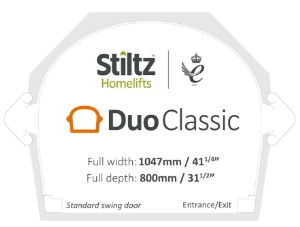
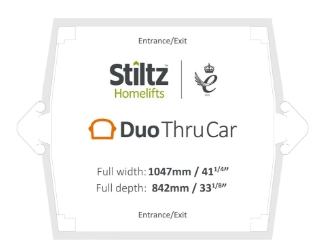
These models have a minimal footprint ( Stiltz Duo ) of approximately 0.55m². Specific elevator dimensions include:
- Duo+: 1047mm (width) x 810mm (depth)
- Duo Classic: 1047mm (width) x 800mm (depth)
- ThruCar Model (dual-exit): Requires 842mm depth for installation
These elevator dimensions make compact lifts perfect for personal use in smaller homes, ensuring they fit seamlessly into tight spaces.
Wheelchair-Fridenly Home Lifts
If you need a larger lift — especially to make your home more wheelchair-friendly—you’ll want a model with a slightly bigger footprint, like our Stiltz Trio.

With a compact 1.25m² footprint, the Trio+ offers a spacious interior, measuring 1047mm in width and 1280mm in depth. This ensures easy access and smooth maneuverability for standard wheelchairs, providing both comfort and convenience.
Learn more about finding the best home lift for you with our helpful guide.
Key Measurements to Consider for a Home Lift Installation
When planning for a home lift installation, precise measurements are essential to ensure a seamless fit and optimal functionality. Below are the key factors to consider, along with detailed measurement guidelines. Factors like the amount of clearance, ceiling height, and potential obstructions can all impact how well the lift functions and how easy it is to use, so it’s vital to consider how a home lift might fit into your space ahead of time.
Let’s look at each of these considerations to prepare for your new home lift:
1. Platform Size
The platform is the area where users stand or sit inside the lift. The required dimensions vary based on usage, it determines how comfortable the lift will be and whether it meets your specific needs. For example,
- Solo Use: A compact platform is sufficient for one person.
- Wheelchair Accessibility: A larger platform is necessary to accommodate wheelchair users and those needing extra support.
For instance, Stiltz home lifts offer a range of platform sizes, ensuring flexibility for different home layouts and mobility needs.
2. Shaft Size
The shaft is the vertical space required for the lift to travel between floors. Home lifts are designed to fit within compact spaces, but accurate ceiling height and floor cutout measurements are crucial to avoid installation issues.
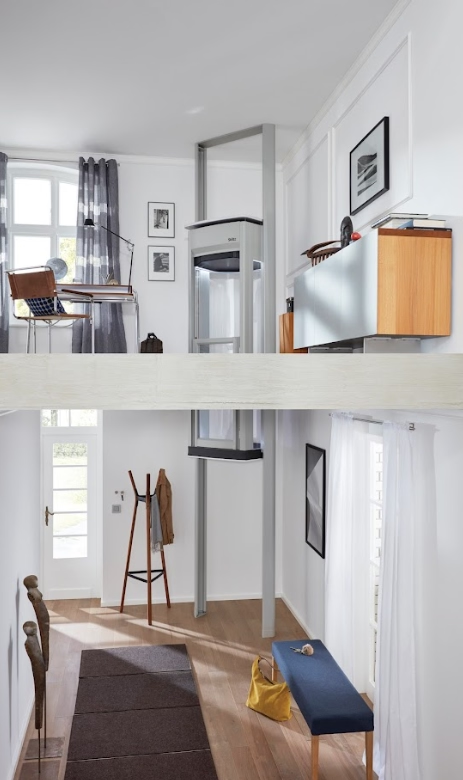
3. Clearance Around the Lift
Adequate clearance ensures smooth entry, exit, and door movement, so measuring for a home lift to make sure there’s enough clearance, or ‘extra space’, around the lift itself is crucial.
Especially when you are using a wheelchair, having plenty of clearance is especially important for maneuvering your chair into place.
The required space may vary based on door size and personal preferences, but generally, it’s best to have at least 800mm of clearance around the lift doors. This ensures smoother daily use and makes entering and exiting the lift more convenient.
4. Ceiling Height Requirements
Ceiling height is a key consideration when measuring for your home lift, ensuring smooth travel between floors.
For Stiltz home lifts, the following elevator dimensions apply:
- Minimum ceiling height (upper floor): 2370mm
- If necessary, certain models can be shortened by 150mm, though this reduces internal cabin height, affecting taller users.
- Lower floor clearance: At least eight inches (≈200mm) to access electrical components for maintenance
5. Potential Obstructions
When planning for your new home lift, it’s helpful to look for any fixed obstacles that could get in the way. Factors like,
- Plumbing pipes
- Electrical wiring
- Structural elements
can sometimes limit your options for where the lift can be placed. If obstacles exist, consider an alternative placement or consult a Stiltz engineer for expert guidance.
How to Measure Your Space for a Home Lift in 4 Steps
Installing a domestic lift requires thoughtful planning to find the optimal location for smooth floor-to-floor travel. With just a few measurements, you can quickly determine whether a home lift will fit in your space.
What you’ll need
Measuring your home for a domestic lift is a straightforward process that requires minimal tools. To get started, gather:
- A measuring tape (in mm)
- Paper to record your measurements
- A sturdy step ladder
- An assistant for support or to take the measurements for you
1. Choose Your Installation Location
Before measuring for your home lift, it’s important to choose the ideal installation location. Consider areas that offer the most convenience and accessibility. Common placement options include spare rooms, spacious unused cupboards, or even repurposing a garage space that connects to the main living areas.
When choosing a location, it’s important to remember that :
- There must be enough space on both the lower and upper floors for the lift to pass through.
- The space should be free of fixed obstructions like plumbing, electrical wiring, or beams.
- The lift should integrate smoothly into your home layout without disrupting movement flow.
Once you’ve chosen your installation spot, clear the area of furniture to get an accurate sense of available space.
2. Measure the Ceiling Height
Ceiling height measurements are critical to ensuring the lift can be installed without modification.
Steps to Measure:
- Place the end of your measuring tape level with the ceiling and extend it straight down to the floor.
- If the ceiling is too high to reach, use a sturdy step ladder and wear anti-slip footwear for safety.
- Record the ceiling height in millimeters (mm) for both the lower and upper floors.
This can be a tricky step if you are not sure about this, we encourage you to ask a family member or friend for assistance or schedule a consultation with a Stiltz professional.
3. Measure the Clearance from the Wall
Making sure that you have enough clearance from the wall to fit the entire lift and allow the doors to open fully is essential.
Steps to Measure:
- Start from the wall behind the chosen installation spot and extend the tape measure towards the middle of the room.
- Ensure there is at least 800mm of clearance in front of the lift doors to allow for easy access.
- If the lift will be used by wheelchair users, measure additional space to allow smooth maneuvering.
Repeat this step for the upper floor to confirm there is enough clearance at both entry and exit points.
4. Measure the width required
Ensuring that your Stiltz home lift fits comfortably in your chosen space requires accurate width measurements.
Steps to Measure:
- Use a measuring tape to record the width of the installation area from wall to wall or from the wall to the nearest immovable object.
- Repeat the measurement on the upper floor to confirm there is enough space for the lift when it travels between levels.
- Allow extra room around the lift for accessibility and ease of movement, especially if a wheelchair-accessible model is needed.
Lift Dimensions to Consider:
- Duo Home Lift (2-person model): 1040mm (W) x 760mm (D)
- Trio Home Lift (Wheelchair-accessible model): 1040mm (W) x 1378mm (D)
For lifts with a larger footprint, consider how this will impact the flow of movement in your room, hallway, or corridor. Proper measurements ensure that the lift integrates seamlessly into your home without causing congestion or restricting space.
Need Assistance? Stiltz Offers Expert Consultations
If measuring your space feels challenging, don’t worry we are here to help! Stiltz provides a free in-home consultation as part of the installation process. A Home Lift Advisor (HLA) will assess your space, discuss available options, and recommend the best placement for your lift to ensure a perfect fit in your home.
Stiltz Home Elevator Dimension Chart
Stiltz home elevators are designed to be compact, space-saving, and easy to install without requiring a pit or load-bearing walls.
Below is a detailed overview of the Stiltz Home Elevator Dimension Chart:
| Duo+ | Trio+ | |
| Load Capacity | 170 kg (375 lbs) | 250 kg (550 lbs) |
| Passenger Capacity | 2 people | 3 people or wheelchair user |
| External Dimensions | 1046 mm (W) x 765 mm (D) | 1047 mm (W) x 1280 mm (D) |
| Internal Cabin Size | 777 mm (W) x 670 mm (D) | 773 mm (W) x 967 mm (D) |
| Required Floor Opening Size | 1046 mm x 765 mm | 1280 mm x 1047 mm |
| Maximum Travel Height | 4.5 meters | 6 meters |
| Power Requirement | 220-240V AC | 5 Amps | 220-240V AC | 5 Amps |
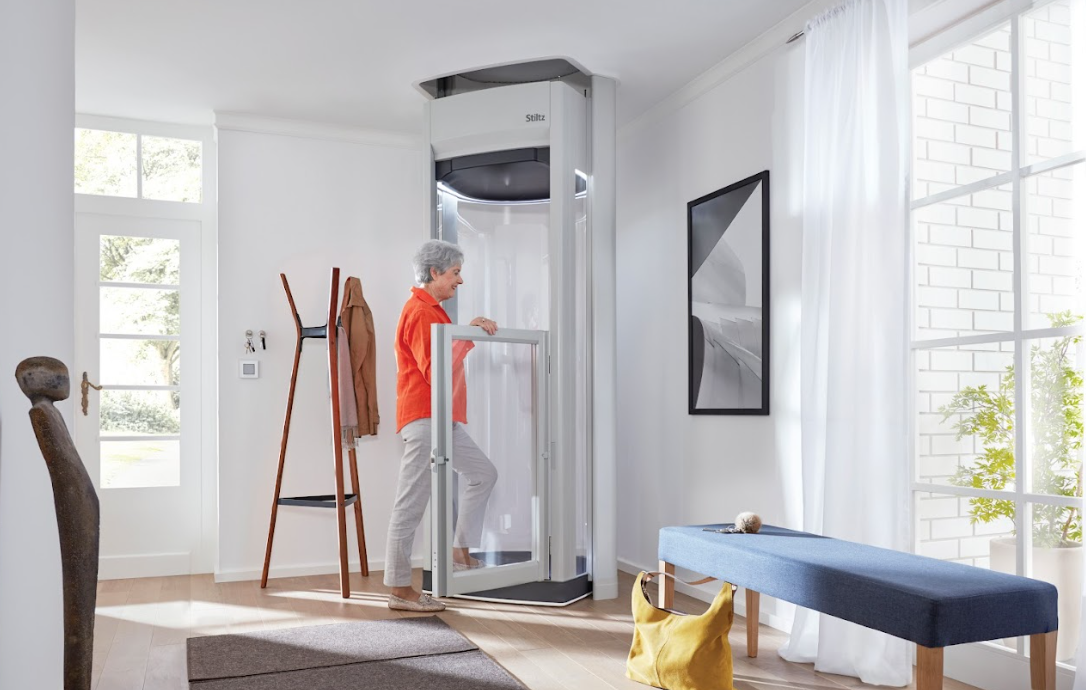
Stiltz home lifts use a self-supporting dual-rail system, eliminating the need for a pit or load-bearing wall. With a compact footprint (Duo+ covers just 0.55m²), they offer flexible installation and are suitable for various types of residential structures.
Their panoramic design ensures a bright and open feel, enhancing the aesthetics of the home. Since no pre-built lift shaft is required, Stiltz lifts can be installed in the corner of a living room, at a stair landing, or even inside a closet, maximizing indoor space utilization. Additionally, Stiltz lifts operate with a quiet electric drive system, ensuring smooth and low-noise performance.
Frequently asked questions
Can I Install a Home Lift if My Ceilings Are Lower Than Average?
Yes, a home lift can still be installed even if your ceilings are lower than standard height. Many models, including Stiltz home lifts, are designed with flexible installation options to accommodate reduced ceiling heights.
For example, the Duo and Trio home lifts can have their cabins shortened by up to 150mm, making them suitable for homes with limited overhead space. During your consultation, a Stiltz engineer will assess your home and discuss any necessary modifications to ensure a perfect fit.
How Many Floors Can a Home Lift Serve?
Most home lifts are built to travel between two floors, making them an excellent solution for improving accessibility in multi-level homes.
Stiltz home lifts are freestanding and self-supporting, meaning they don’t require load-bearing walls, giving homeowners greater flexibility in choosing an installation location. For homes with more than two floors, installing additional lifts may be necessary to ensure full access to all levels.
How Much Room Do You Need For Home Lift?
Space constraints are one of the biggest concerns when installing a home lift. Domestic lifts come in various sizes, and the space required depends on factors such as the drive system, lifting capacity, and door design.
Our smallest two-person home lift, the Stiltz Duo, requires only 1040mm x 760mm, making it one of the most compact home lifts available. For wheelchair users, the Stiltz Trio provides more space while still maintaining a minimal footprint, requiring just 1040mm x 1378mm.
With flexible installation options and minimal space requirements, Stiltz home lifts are designed to fit seamlessly into almost any home, ensuring greater accessibility without compromising on space.
Transform Your Home with Stiltz
Installing a home lift is a life-changing upgrade that enhances independence, mobility, and convenience. While measuring your space may seem overwhelming at first, it’s the crucial first step in preparing for a lift that will make your home easier to navigate.
From selecting the perfect installation location to checking door clearance, ceiling height, and available space, every detail ensures a seamless fit.
At Stiltz, we offer a variety of compact and stylish home lifts designed to integrate effortlessly into your home:
✔ Duo Home Lift – A space-saving option ideal for smaller areas
✔ Trio Home Lift – A wheelchair-accessible model with extra room for added comfort
Our team of home lift specialists is here to help you make the best choice for your needs. Contact us today to explore our Stiltz home lift range and start transforming your home for greater comfort, accessibility, and aging in place.
Recent Comments